普通高中课程标准实验教科书 英语必修2 Unit2 The Olympic Games
时间:2018-12-29 作者:英语课 分类:高中一年级英语
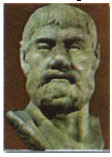
Pausanias, who was a Greek writer about 2,000 years ago, has come on a magical journey on March 18th, 2007 to find out about the present-day Olympic Games. He is now interviewing Li Yan, a volunteer for the 2008 Olympic Games.
P: My name is Pausanias. I lived in what you call "Ancient Greece" and I used to write about the Olympic Games a long time ago. I've come to your time to find out about the present- day Olympic Games because I know that in 2004 they were held in my homeland. May I ask you some questions about the modem 1 Olympics?
L: Good heavens! Have you really come from so long ago? But of course you can ask any questions you like. What would you like to know?
P: How often do you hold your Games?
L: Every four years. There are two main sets of Games - the Winter and the Summer Olympics, and both are held every four years on a regular basis. The Winter Olympics are usually held two years before the Summer Games. Only athletes who have reached the agreed standard for their event will be admitted as competitors. They may come from anywhere in the world.
P: Winter Games? How can the runners enjoy competing in winter? And what about the horses?
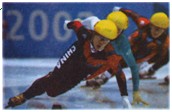
L: Oh no! There are no running races or horse riding events. Instead there are competitions like skiing and ice skating which need snow and ice. That's why they' re called the Winter Olympics. It's in the Summer Olympics that you have the running races, together with swimming, sailing and all the team sports.
P: I see. Earlier you said that athletes are invited from all over the world. Do you mean the Greek world? Our Greek cities used to compete against each other just for the honour of winning. No other countries could join in, nor could slaves or women!
L: Nowadays any country can take part if their athletes are good enough. There are over 250 sports and each one has its own standard. Women are not only allowed, but play a very important role in gymnastics, athletics 2, team sports and ...
P: Please wait a minute! All those events, all those countries and even women taking part! Where are all the athletes housed?
L: For each Olympics, a special village is built for them to live in, a main reception building, several stadiums for competitions, and a gymnasium 3 as well.
P: That sounds very expensive. Does anyone want to host the Olympic Games?
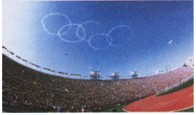
L: As a matter of fact, every country wants the opportunity. It's a great responsibility but also a great honour to be chosen. There's as much competition among countries to host the Olympics as to win Olympic medals. The 2008 Olympics will be held in Beijing, China. Did you know that?
P: Oh yes! You must be very proud.
L: Certainly. And after that the 2012 Olympics will be held in London. They have already started planning for it. A new village for the athletes and all the stadiums will be built to the east of London. New medals will be designed of course and...
P: Did you say medals? So even the olive 4 wreath 5 has been replaced! Oh dear! Do you compete for
prize money too?
L: No, we don't. It's still all about being able to run faster, jump higher and throw further. That's the motto of the Olympics, you know - "Swifter 6, Higher and Stronger."
P: Well, that's good news. How interesting! Thank you so much for your time.
- Does your computer have a modem?你的电脑有调制解调器吗?
- Provides a connection to your computer via a modem.通过调制解调器连接到计算机上。
- When I was at school I was always hopeless at athletics.我上学的时候体育十分糟糕。
- Our team tied with theirs in athletics.在田径比赛中,我们队与他们队旗鼓相当。
- Our school has a big gymnasium.我们学校有座大型体育馆。
- The game will be staged in the gymnasium.竞赛将在体育馆举行。
- Have you eaten a kind of fruit called olive?你吃过橄榄这种水果吗?
- She likes olive because It'symbolizes peace.她喜欢橄榄色因为它象征着和平。